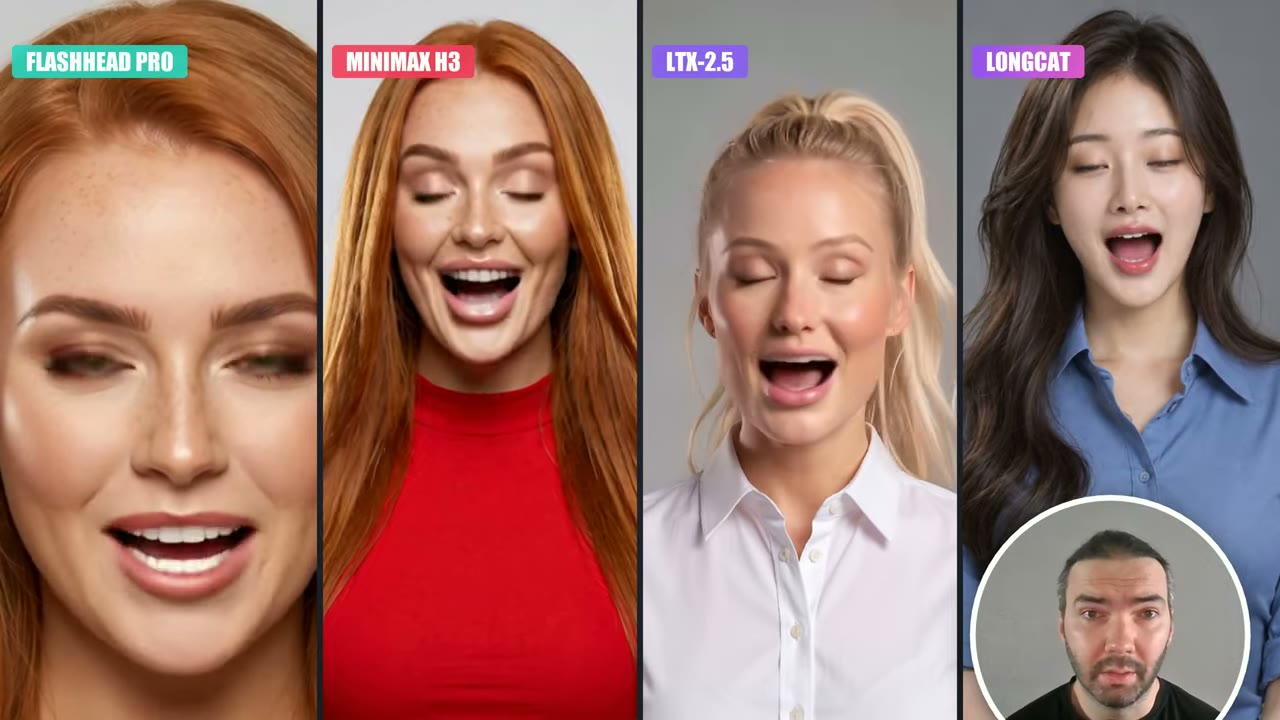
I’ve now made talking avatars with four open models: FlashHead Pro, MiniMax H3, LTX-2.5 and LongCat. All four do the same job: one portrait and one voiceover in, a lip-synced video out.
One minute of finished video costs anything from about 4 cents to about $4, a 100× gap, and the quality varies just as much. I spent about $300 of my own GPU time on these, running my own projects for hours, so this comparison is based on real long-form renders. Each model has its own guide and a free template; this page is about choosing between them.
In short
- Cheapest: FlashHead Pro, about $0.04 per minute, but face only.
- My favourite: LTX-2.5, a full-bust presenter for about $0.19 per minute that can run for hours.
- Best quality: LongCat, half body with hands, but about $1–4 per minute and up to an hour of rendering per minute.
- Skip for avatars: MiniMax H3. Poor prompt adherence, random zooms, and a licence that excludes the US, EU, UK and South Korea.
- Against paid tools: FlashHead Pro is roughly 100× cheaper than HeyGen; LongCat costs about the same.
The numbers side by side
My renders on RunPod, on-demand prices, October 2026, per minute of finished video:
| Model | Output | GPU | Render time per minute | Cost per minute | 10-minute video |
|---|---|---|---|---|---|
| FlashHead Pro | Face, 512 × 512 | RTX 5090 | ~1.8 min | ~$0.04 | ~$0.40 |
| MiniMax H3 | Bust, 768 × 768 | RTX 5090 | ~6.6 min | ~$0.13 | ~$1.30 |
| MiniMax H3 | Bust, 768 × 768 | RTX A5000 | ~16 min | ~$0.07 | – |
| LTX-2.5 | Bust | RTX 5090 | ~9 min (estimate) | ~$0.19 | ~$1.90 |
| LongCat | Half body, 960 × 960 | H100 | ~1 h | ~$4 | $10–40 |
| LongCat | Half body, 960 × 960 | RTX PRO 4500 | ~2.7 h | ~$2 | |
| LongCat | Half body, 640 × 640 | RTX PRO 4500 | ~1.4 h | ~$1 |
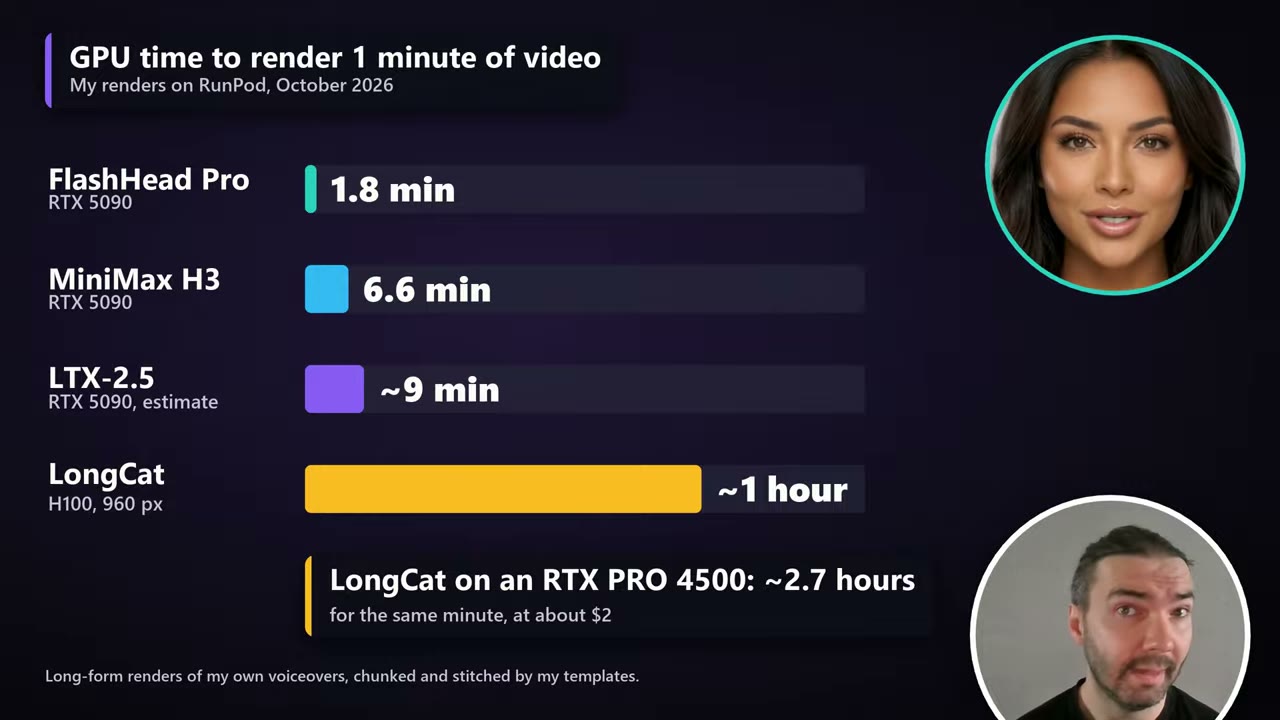
Hardware needs differ just as much. FlashHead Pro peaks at 6.4 GB of VRAM and runs on any RTX 30, 40 or 50 card with 8 GB or more; I tested it on an 8 GB RTX 3080 Laptop GPU. LongCat needs 32 GB of VRAM plus 60 GB or more of system RAM.
Every model renders in chunks
The first thing I learned making these videos: none of these models renders a minute in one go. They render 5, 7 or 10 seconds at a time, and the chunks are stitched into one video. My templates do the stitching for you.
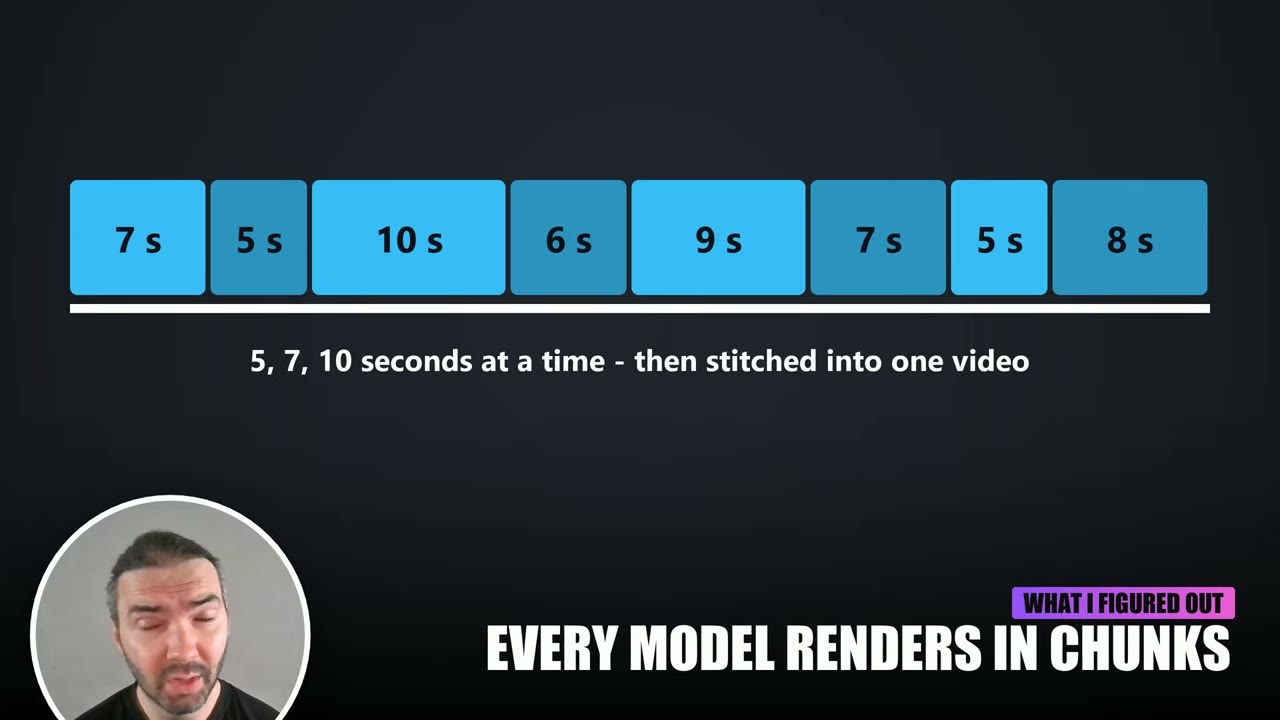
They render in chunks because over a long generation the face drifts and glitches out. So the real difference between the models is what happens at each join.
- LTX-2.5 and MiniMax H3 go back to the original photo for every chunk, every 5–7 seconds or so. It still looks fairly organic.
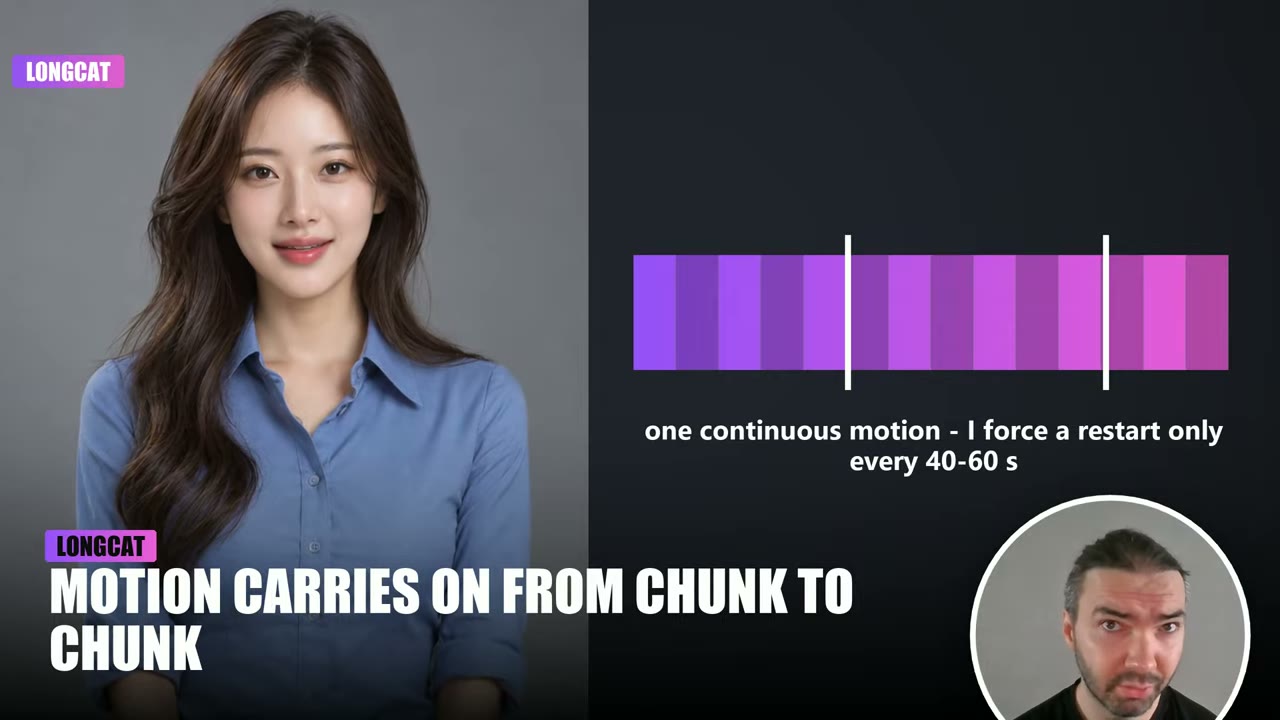
- LongCat carries the motion on from the last chunk, so it’s continuous. I only force a restart to the portrait every 40–60 seconds. FlashHead Pro’s template also renders continuously by default, with no reset to the portrait.
FlashHead Pro: the cheapest
FlashHead Pro is extremely fast: one second of video in about two seconds on an RTX 5090, so a minute renders in under two minutes for about 4 cents. You can also run it locally on a consumer card such as a 3080 or 4060. That’s slower, maybe 10 seconds of rendering per second of video, but still very fast.
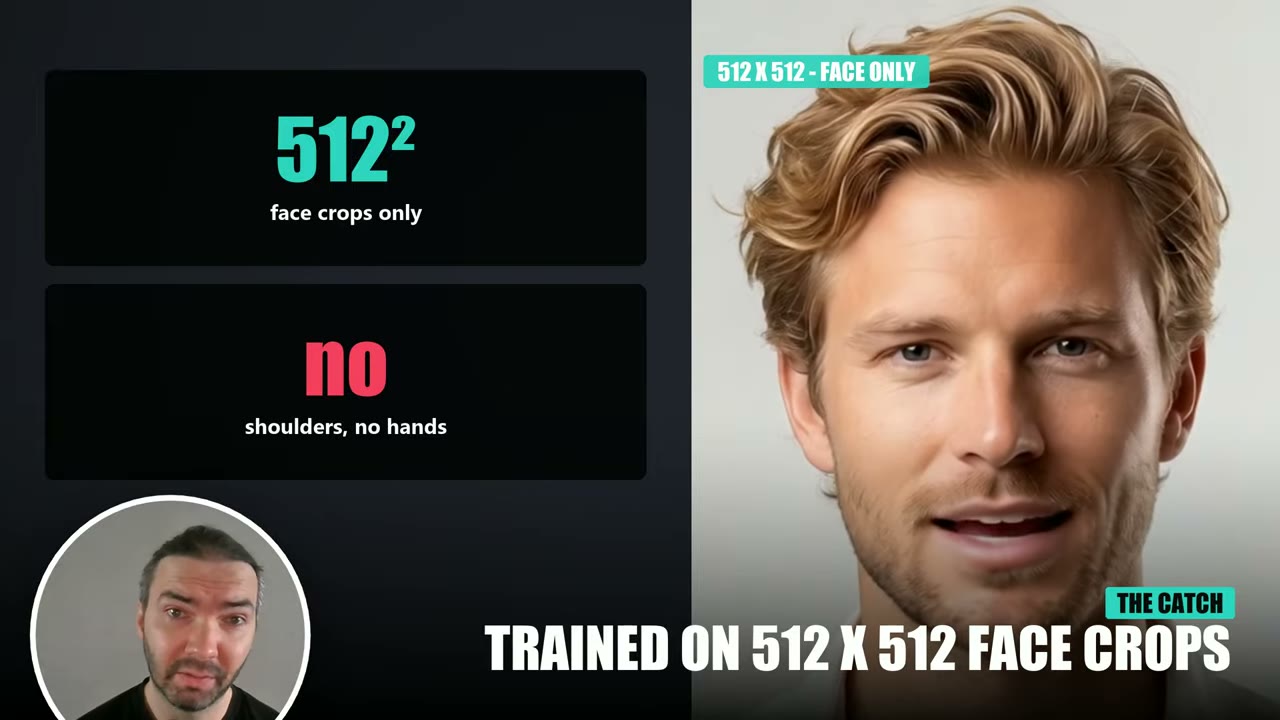
The caveats: the quality isn’t great, and it’s trained only on 512 × 512 crops of faces, so there are no shoulders and no hands. But if you need two hours of a presenter in the corner of the screen and quality doesn’t matter much, it’s the ideal choice. Full guide: FlashHead Pro.
MiniMax H3: the hyped one
MiniMax H3 is getting a lot of attention because it’s a bit cheaper and a bit faster than some of the others. But for avatars, it isn’t good.
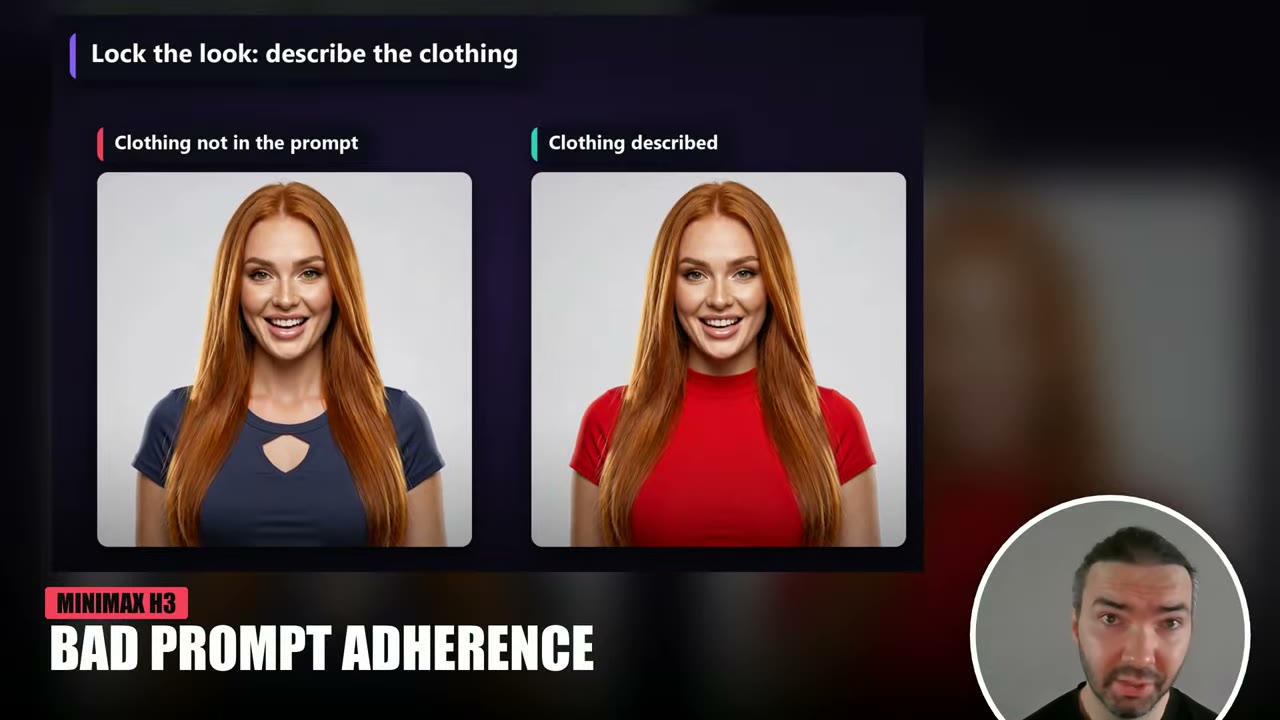
- Prompt adherence is bad. It can change the face or the clothing, so you always have to describe them in the prompt, which you rarely need with the other models.
- It zooms in on the face for no reason, even when the prompt says no zooming and a stable camera.

Its licence also excludes the US, the EU, the UK and South Korea, including where the pod runs. It might be fine for entertainment videos, but for avatars I don’t think it’s worth it. Full guide, with the workarounds: MiniMax H3.
LTX-2.5: my favourite
LTX-2.5 is the most interesting one for me. It gives you a consistent presenter that can run forever: the first and last frame of every chunk is the same neutral face, so the avatar talks, comes back to neutral, then starts talking again. For a presenter, that looks quite natural.
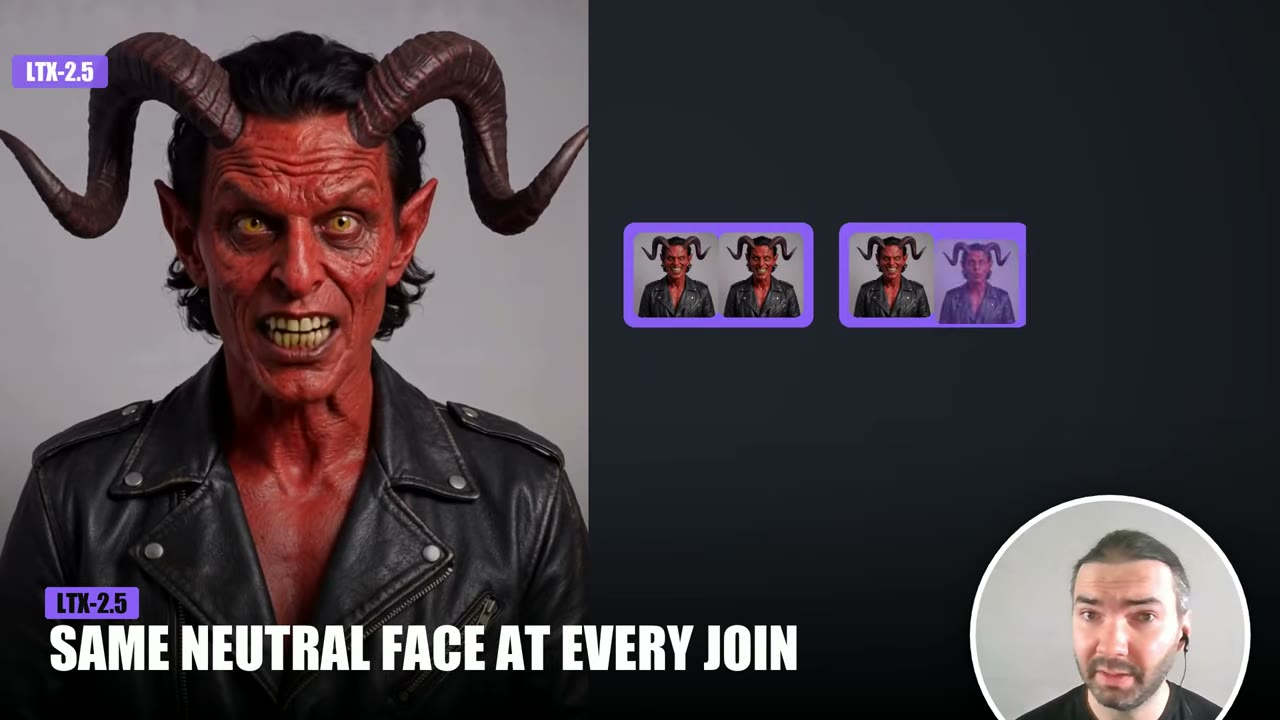
My template finds the pauses in your voiceover and cuts chunks of 3–12 seconds between them, and a script stitches everything into one long video. The joins aren’t perfect: the noise changes a little from chunk to chunk. That’s something I can live with. On an RTX 5090 it’s around 20 cents a minute, and 30 minutes of video takes a few hours to render. Full guide: LTX-2.5.
LongCat: the best quality
LongCat is trained specifically on people talking, and it shows: real hand movement and a full half-body framing. It renders 3.7-second chunks but carries the motion over from one to the next.
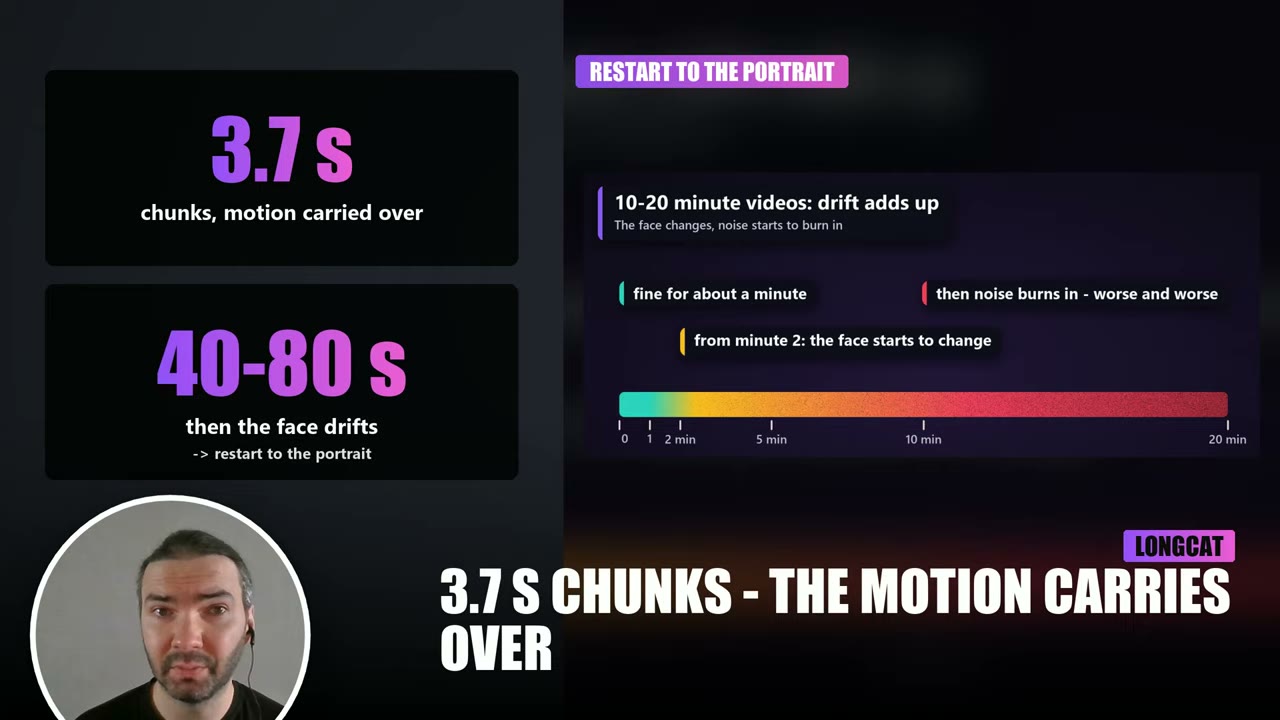
The face does drift after 40, 60 or 80 seconds, so the template restarts from the original portrait. The hands are a risk too: if they go out of frame and come back, the model can add a watch that wasn’t there.
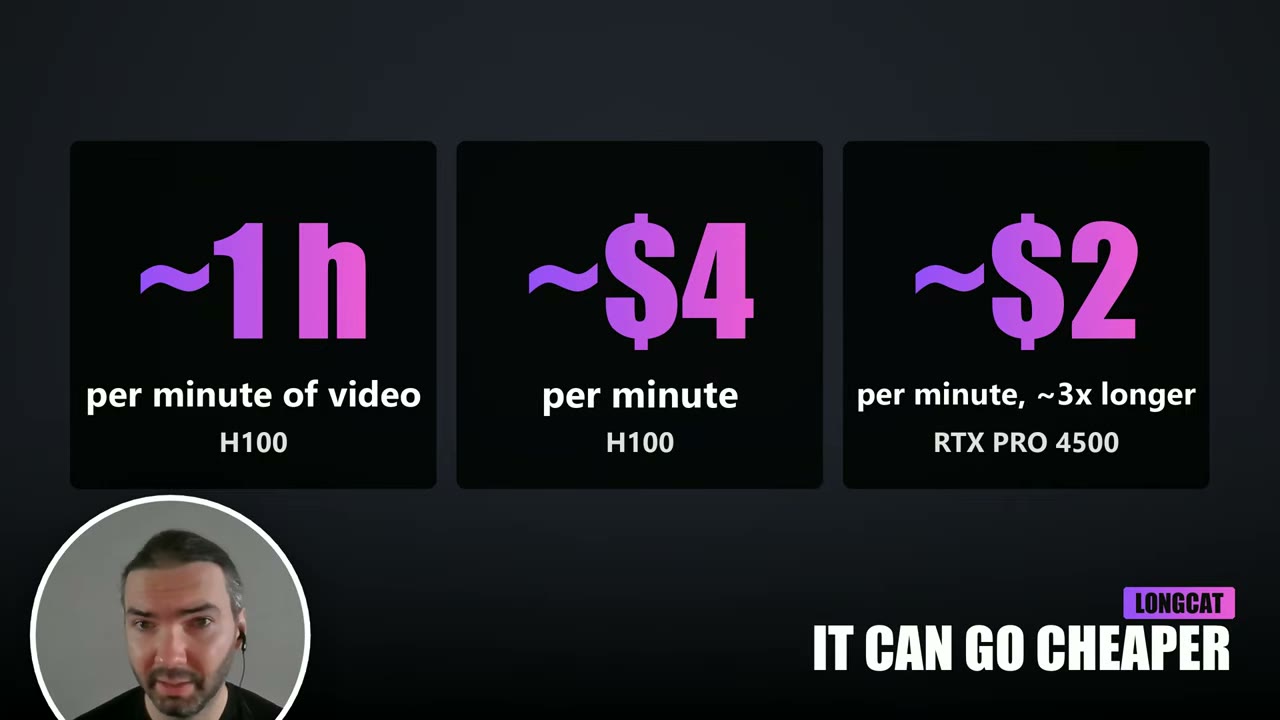
On an H100, one minute of video took an hour of rendering and cost about $4. An RTX PRO 4500 takes about three times longer, for about $2 a minute. It’s the best quality, and also the slowest and most expensive, so it isn’t my everyday pick. Full guide: LongCat.
Open source vs HeyGen, Hedra, Kling and Higgsfield
Closed-source avatar tools are, in my opinion, overhyped and extremely expensive. Here are their published per-minute prices next to my renders:
| Tool | Price per finished minute | Source |
|---|---|---|
| FlashHead Pro (my renders) | ~$0.04 | this site |
| LTX-2.5 (my renders) | ~$0.19 | this site |
| LongCat (my renders) | ~$1–4 | this site |
| HeyGen Avatar IV API | ~$3–4 | HeyGen help, Anam |
| Hedra Character-3 (720p) | ~$3 | AdTestBench |
| Kling Avatar v2 | ~$3.40 Standard, ~$6.90 Pro | CostGoat |
| Higgsfield Speak 2.0 | ~$5.50–12, depending on the plan | Aliteq |
| Seedance 2.0, 720p (a general video model) | ~$9 (BytePlus) to ~$18 (fal) | useapi.net, Wireflow |
Paid-tool prices were checked between July and October 2026 and change often.
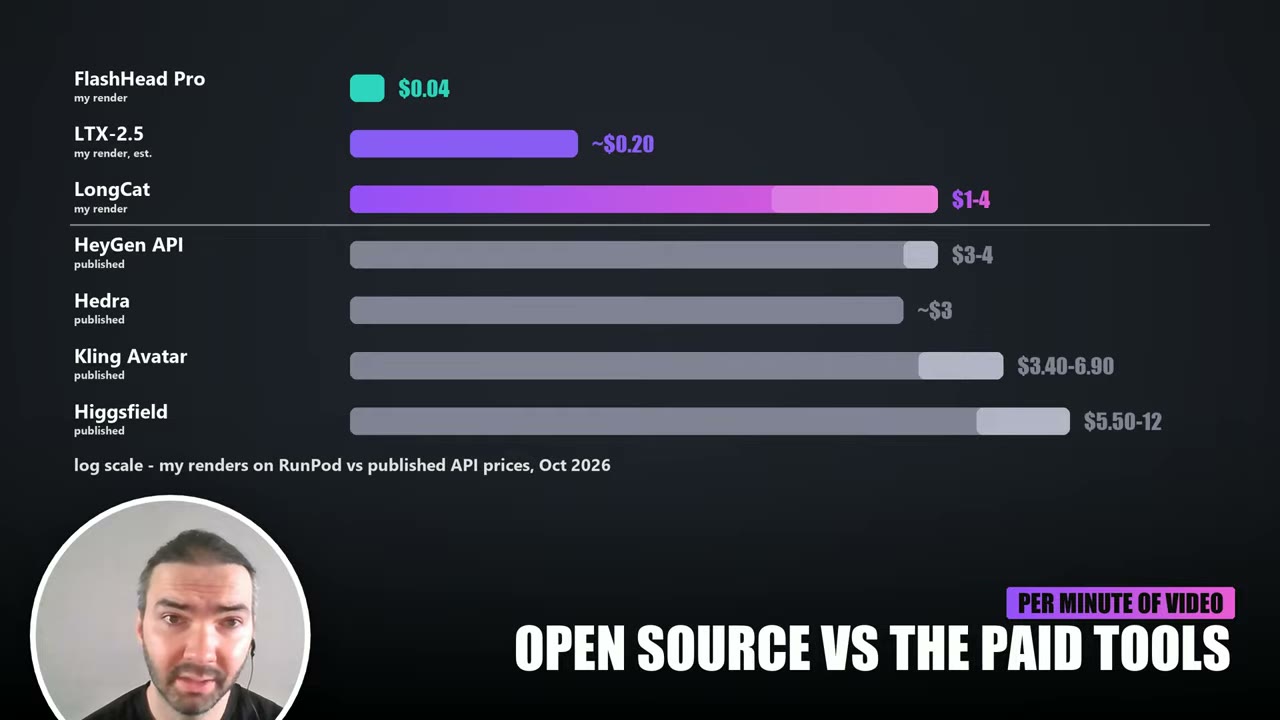
So FlashHead Pro is about 80–110 times cheaper per minute than HeyGen, and LTX-2.5 about 15–20 times cheaper. LongCat costs about the same as HeyGen and Hedra, but you own the pipeline.
My picks
- Long voiceovers, as cheap as possible: FlashHead Pro.
- A full-bust presenter that runs for hours: LTX-2.5.
- When I really need the best quality: LongCat.
- MiniMax H3: I’d skip it for avatars.
Running them
Each model has a free template on GitHub and a one-click RunPod template; the links are in each guide. You can run any of them two ways:
- On RunPod, with the one-click template, everything set up. If you’re new to it, start with my introduction to RunPod.
- Locally in ComfyUI, if your GPU is big enough: ask Claude (or any AI) to fetch the files from GitHub and install them in the order of
setup.sh.
| Model | GitHub |
|---|---|
| FlashHead Pro | tenitsky/flashhead-pro-avatar |
| MiniMax H3 | tenitsky/minimax-h3 |
| LTX-2.5 | tenitsky/ltx-2.5-template-files |
| LongCat | tenitsky/longcat-avatar |
Sign up through my RunPod referral link and you get $5–$500 in RunPod credits. Without a referral link there's no bonus. I get the same bonus and use it for compute.
Watch the video version (5:56)
Everything above is in the video too, if you'd rather follow along on screen.
FAQ
What is the cheapest open-source talking-avatar model?
Of the four I tested, FlashHead Pro: about $0.04 per finished minute on an RTX 5090, rendering a minute in about 1.8 minutes. The output is a 512 × 512 face crop.
Which open-source avatar model has the best quality?
LongCat-Video-Avatar 1.5: half body, hand movement and continuous motion. It is also the slowest and most expensive, about an hour and $4 per finished minute on an H100.
How do open-source avatar models compare with HeyGen on price?
Against HeyGen’s Avatar IV API at about $3–4 a minute, FlashHead Pro is about 80–110 times cheaper and LTX-2.5 about 15–20 times cheaper. LongCat costs about the same as HeyGen and Hedra.
Why do avatar models render in chunks?
None of them can generate a long video in one go, and the face drifts and glitches over long generations. So they render 3.7 to 10 seconds at a time, and the chunks are stitched together with the original audio.
Can I run these models on my own GPU?
FlashHead Pro runs on any RTX 30, 40 or 50 card with 8 GB or more. LTX-2.5 and MiniMax H3 want 32 GB of VRAM, and LongCat 32 GB of VRAM plus 60 GB or more of system RAM.
Anton Tenitsky is a 3D artist with 15+ years in computer graphics, working with Nickelodeon, Gameloft, Marvel Rivals and many other clients. More about me